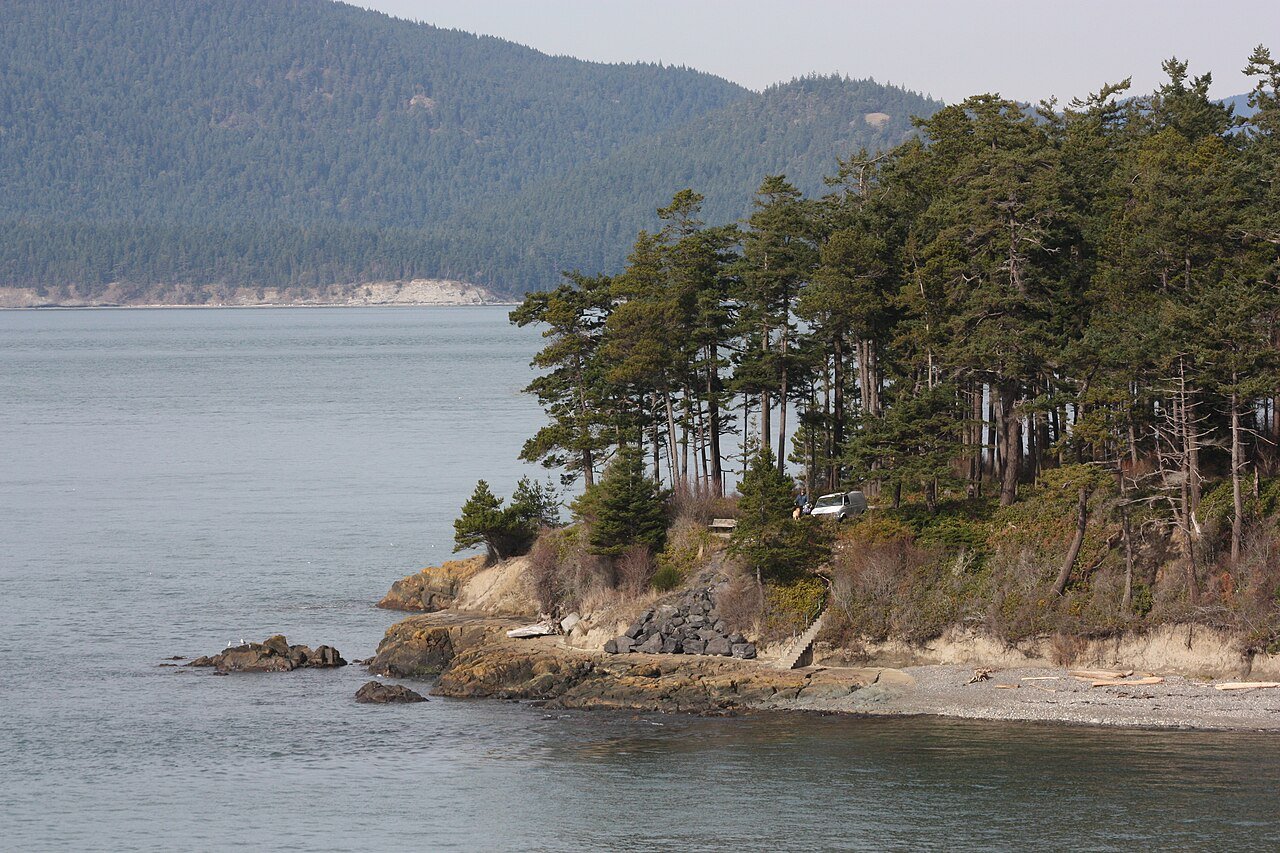
Pinus sylvestris · Pinaceae (pine family)
Few trees are as widespread as the Scots pine. It stretches across Eurasia and is the only pine native to northern Britain.

Quick facts
| Scientific name | Pinus sylvestris |
| Family | Pinaceae (pine family) |
| Native range | From Scotland and Spain across Europe and Siberia to the Pacific |
| Habitat | Boreal forest, heaths and sandy or rocky soils |
| Typical height | 25–35 m |
| Lifespan | Up to 700+ years |
| IUCN status | Least Concern (LC) |
Overview
Scots pine is a key tree of the boreal (taiga) forest and grows in a wide range of conditions, from frozen northern lands to dry Mediterranean mountains. In Scotland, the remnants of the ancient Caledonian Forest are dominated by this species.
How to identify it
Mature trees have a distinctive bright orange-red upper trunk with flaky bark. Needles come in pairs, are blue-green, short and often slightly twisted. Cones are small and pointed.
Ecology
Scots pine forests are home to red squirrels, capercaillie and crossbills, whose crossed beaks are adapted to prise seeds from pine cones. The tree is hardy and quick to colonise open ground after fire.
Uses and culture
It is one of Europe’s most important timber trees, used for building, paper and furniture. It is the national tree of Scotland. The species is listed as Least Concern.