Tectona grandis · Lamiaceae (mint family)
Teak is one of the most valuable timbers in the world. Its golden wood is naturally oily, so it resists water, rot and insects for decades.
Quick facts
| Scientific name | Tectona grandis |
| Family | Lamiaceae (mint family) |
| Native range | India, Myanmar, Laos and Thailand |
| Habitat | Tropical dry and moist deciduous (monsoon) forests |
| Typical height | 30–40 m |
| Lifespan | 100+ years |
| IUCN status | Endangered (EN) |
Overview
Teak grows in monsoon forests that have a long dry season. During the dry months it drops its huge leaves to save water. Most teak used today comes from plantations across Asia, Africa and Latin America, but natural teak forests are now rare.
How to identify it
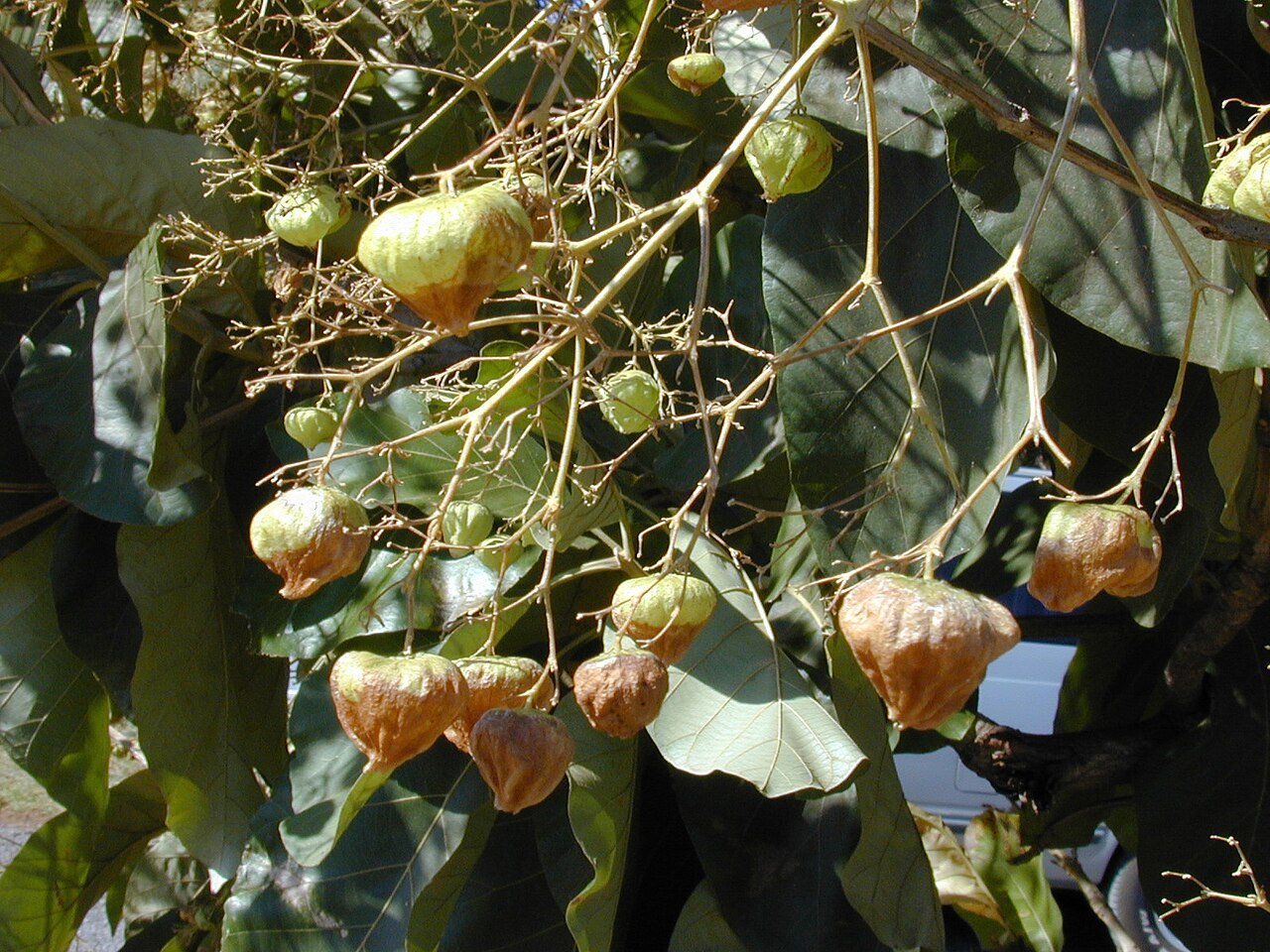
Leaves are enormous — often 30–60 cm long — rough on top and slightly hairy below. Small white flowers grow in large clusters at the top of the tree, followed by round, papery fruits.
Uses and culture
Teak has been used for shipbuilding for centuries, and it remains a favourite for boat decks, outdoor furniture and flooring. Fun fact: despite being a large tree, teak belongs to the same family as mint and basil.
Conservation
Overharvesting of natural forests, especially in Myanmar, has led the IUCN to list wild teak as Endangered. Choosing certified, plantation-grown teak helps protect the remaining natural stands.